The future of software IDEs
Will you need to code?

Yesterday the 2024 State of AI Report was released. It contains ten predictions for 2024. One of these is “An app or website created solely by someone with no coding ability will go viral (e.g. App Store Top-100)”.
Just twelve months ago this was unthinkable. You needed some coding ability to be able to build a website or app. Sure, the models back then could create code. But it was often buggy. And trying to get the model to fix the bugs nearly always made things worse. Models couldn’t debug. It was frustrating.
But today, Claude and o1 have revolutionized the game. It’s possible to create products just via prompting the models. The quality of the initial code is high; and if it doesn’t work the models are much better at debugging and fixing problems.
Things are only going to get better from here. Imagine the frontier model of Claude, with the reasoning abilities of o1 and the 2M token context window of Gemini. What will that be able to achieve?
If I were to launch a start-up today, one of the things I’d want to build is the software development IDE of the future. It would look very different to our current tools. Gone is the code editing window. Gone are the myriad toolbars and plug-ins. Instead, there would be two text panels and two buttons. One text panel would contain a record of the verbal discussion with the AI tool. The second text panel would document the requirements for the software. And the two buttons? The first is Create. The second Run.
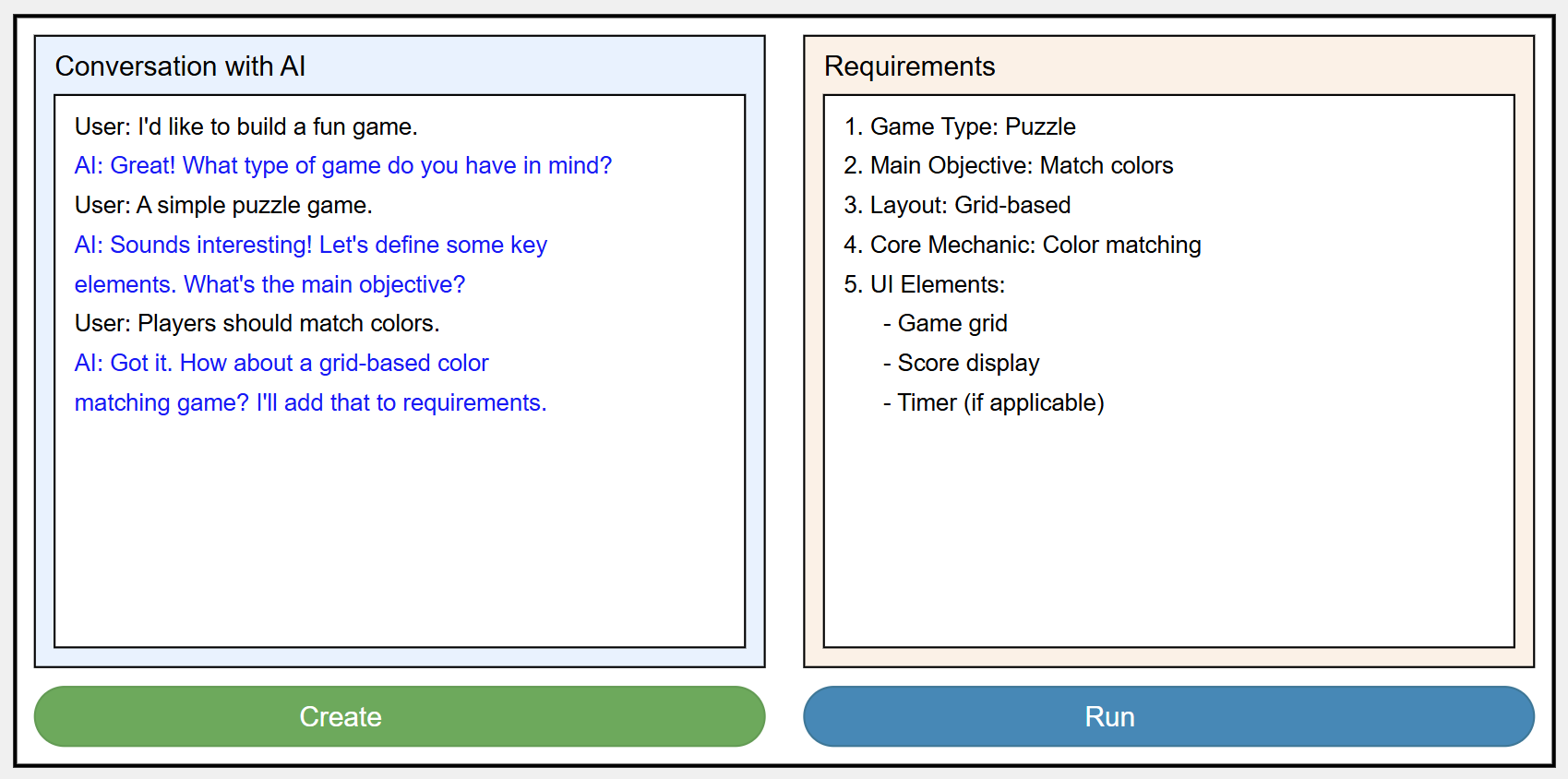
To build a new product you talk to the tool. “I’d like to build a fun game”, you might say. The tool offers ideas. It questions to clarify the requirements. It works out what you’ve got in mind and makes suggestions to fill in the gaps. It works with you. It guides you.
With the requirements in place, you press Create. The model builds the code. Writes tests. Runs the tests, finds bugs and fixes them. It iterates until the tests pass. Then you press Run and play with your new toy.

In this world there’s no way to look at the underlying code. You don’t need to. There’s no way to see the internal architecture. Architecture, encapsulation and abstraction are the mechanisms humans use to deal with complexity. But models can already deal with more complexity than humans, so they don’t need the same levels of decomposition and encapsulation. The internal architecture is just one large component. The model writes directly in machine code. It doesn’t need to bother with the high-level programming languages that were created to enable humans to understand what the code does.
You no longer need to understand coding to build tools. Suno and udio have made it possible for anyone to create catchy, high-quality music. These tools will do the same for coding. Anyone will be able to create apps and games.
How far are we away from this world? It’s probably possible for small 200 line applications right now. But as the models improve the size will increase. It’ll take time until we’re able to build 100kloc sized apps. But that day will come.
It seems quite likely next year’s State of AI Report will be able to confirm their prediction came true. And they’ll be predicting much larger applications will be autonomously created by AI in 2026. Don’t be surprised in a few years’ time when your five-year-old builds a new operating system before breakfast. It’s coming.